Refurbishment bridge loans: an investor guide for 2026
A refurbishment bridge loan is short-term finance, secured by a mortgage over the property itself, that allows a borrower to buy a building or home in need of works, refurbish it and repay the loan through a sale or a long-term refinancing. For the investor who provides the capital, it is a form of private debt backed by a real asset whose value should rise as the works progress. Here we explain how it is structured, which metrics to look at and what the risks are.
What a refurbishment bridge loan is and why it exists
Traditional banks are comfortable financing finished homes and developers with a track record. They are less comfortable with an old building, empty or let at low rents, that produces no income and whose value depends on works that have not yet been carried out. This is where private lending comes in: a 12 to 24-month loan that covers the purchase and part of the works, repaid when the refurbished units are sold or when the stabilised asset is refinanced.
Bridge loans are also used at other stages of a project, as we explain in land acquisition financing in Spain. Here we focus on what is specific to refurbishment: the value of the asset changes during the life of the loan, which calls for different metrics.
Typical use cases
- A whole residential building in a city centre, refurbished and split into flats for sale.
- Full renovation of homes bought below market value (for example at auction or as repossessed property) to sell them once renovated.
- Energy upgrades to reposition a building in the rental market.
- Change of use, such as offices to homes, which carries its own planning risks, covered in office-to-residential conversion financing.
Trends: what is happening worldwide and in Spain
- Europe keeps raising record sums for private debt. On 4 November 2026, Alternative Credit Investor reported that Blackstone had closed its fourth European direct lending vehicle with EUR 13bn of investable capital, and that some investors see European private credit as a diversifier versus the US market (source). Institutional capital continues to flow into non-bank lending in Europe.
- Refurbishment has public funding in Spain. The State Housing Plan 2026-2030 (Royal Decree 326/2026 of 22 April) mobilises EUR 7bn and requires 30% of the annual funding to go to the refurbishment, accessibility and urban regeneration line (BOE, Spain’s Official State Gazette). Grants lower the cost of some works, but come with timelines and conditions that must fit the loan schedule.
- The market is mainly second-hand homes. According to the INE (Spain’s statistics office), 61,417 home sales were registered in July 2026 (-5.1% year on year), and 78.4% were second-hand homes (provisional data). Activity is concentrated in the existing stock, not only in new builds.
For an investor, the reading is twofold: there is demand for finance to refurbish an ageing housing stock, and there is capital looking for this type of deal. That does not remove the risk of each project, which depends on the works, the exit price and the sponsor.
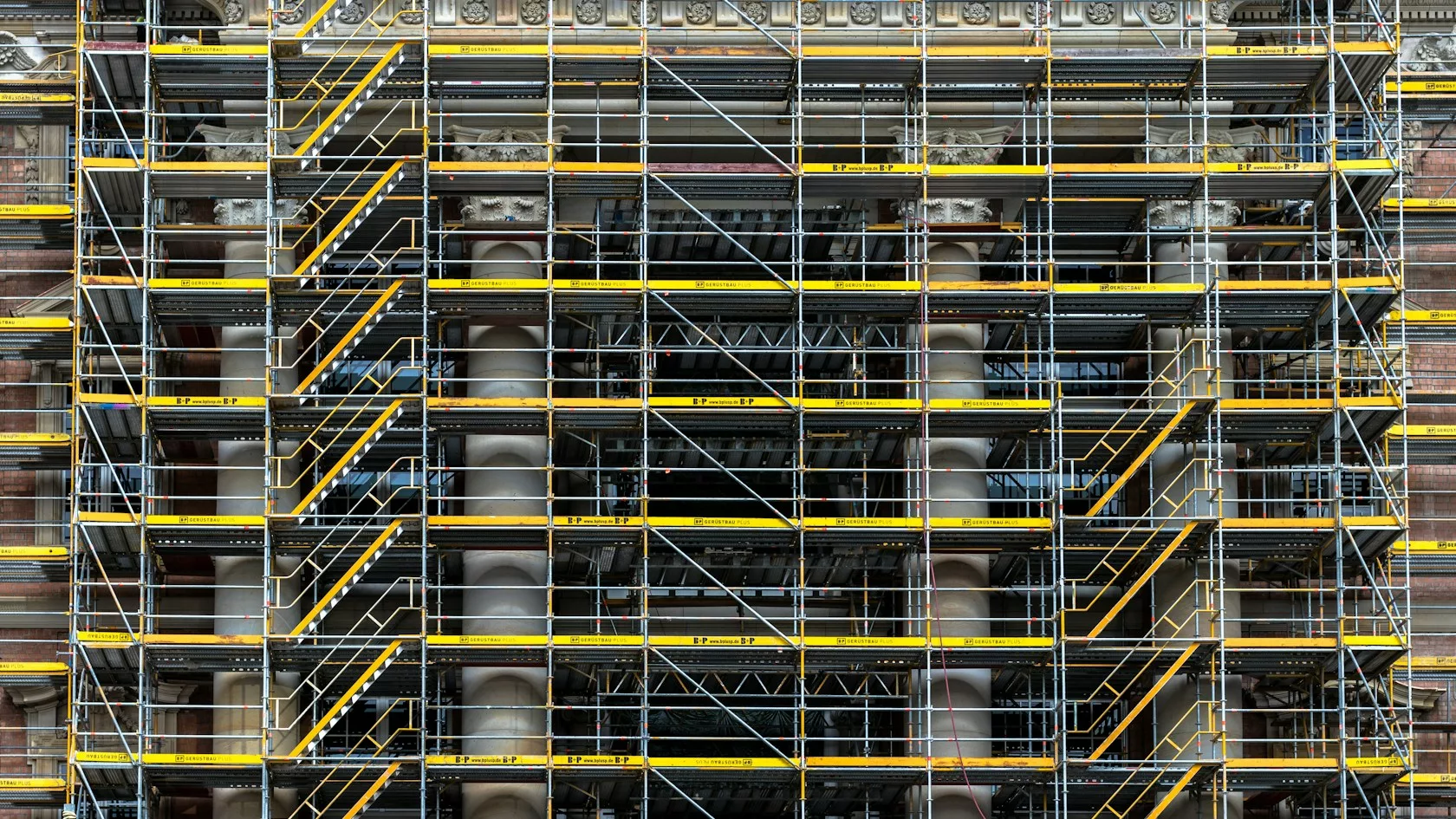
How a refurbishment bridge loan is structured
The main difference from a bridge loan on a finished asset is that the money is not released all at once. It is usually split into two tranches:
- Acquisition tranche: drawn at signing to pay for the property. It is measured against the current appraised value.
- Works tranche: drawn against certificates, as an independent surveyor (often called a project monitor) verifies that the works have progressed and that spending matches the budget.
Interest is usually bullet (paid at maturity) or retained upfront, because the property produces no income during the works. The planned exit (unit sales or bank refinancing) must be defined from the start.
The three metrics to watch
| Metric | What it measures | Why it matters in refurbishment |
|---|---|---|
| Initial LTV | Loan drawn / current property value | Shows the protection if the works never start |
| LTC (loan to cost) | Total loan / total project cost | Shows how much of their own capital the sponsor risks |
| LTGDV | Debt plus interest / estimated value after works | Measures the cushion at maturity, on sale or refinancing |
For more on how collateral protects a lender, see collateral in private real estate debt. As a market reference, the Observatory of Alternative Financing with Mortgage Collateral in Spain, with market analysis by PwC and legal framework by Cuatrecasas, puts the average terms of alternative debt at a 55% LTV, a 10% interest rate and a 28-month term (PwC, October 2026). These are market averages, not the terms of any specific deal.
Illustrative and hypothetical example
Imagine a building bought for EUR 1,800,000, with EUR 700,000 of works and EUR 150,000 of fees, permits and other costs. After refurbishment, the valuation estimates a value of EUR 3,500,000. The loan finances 65% of the purchase and 70% of the works, at an annual rate of 10% (the market average quoted above), with the works drawn evenly over 12 months.
| Item | Amount or ratio |
|---|---|
| Acquisition tranche (65% of EUR 1,800,000) | EUR 1,170,000 |
| Works tranche (70% of EUR 700,000) | EUR 490,000 |
| Total loan | EUR 1,660,000 |
| Sponsor’s own capital | EUR 990,000 |
| Initial LTV / LTC | 65.0% / 62.6% |
Now let us look at maturity under four scenarios:
| Scenario | Accrued interest | Total debt | Exit value | LTGDV |
|---|---|---|---|---|
| Base: 18 months, expected value | EUR 224,500 | EUR 1,884,500 | EUR 3,500,000 | 53.8% |
| Value -15%, 18 months | EUR 224,500 | EUR 1,884,500 | EUR 2,975,000 | 63.3% |
| Delay: 24 months, expected value | EUR 307,500 | EUR 1,967,500 | EUR 3,500,000 | 56.2% |
| Delay and value -15% | EUR 307,500 | EUR 1,967,500 | EUR 2,975,000 | 66.1% |
The lesson: a six-month delay and a 15% fall in the final value shrink the cushion from EUR 1.6m to just over EUR 1m. In this hypothetical case the debt would still be covered, but with less margin. In real life, delays and cost overruns tend to come together, which is why adverse scenarios should be analysed before investing, not just the base case.
How we analyse these deals at Ondara
Ondara Group has structured private debt deals secured by real estate since 2018. In a refurbishment we review, among other points, the current valuation and the estimated value after works, the budget and the contractor, the permits, the capital the sponsor puts at risk and a realistic exit with a fallback plan. Investors deal directly with the management team, can diversify across several deals and can take part from a minimum investment of EUR 25,000. We seek target double-digit returns, always as a target and never guaranteed. You can meet the team on our who we are page.
Risks to consider
- Construction risk: cost overruns, hidden structural problems in old buildings or a contractor who fails to deliver.
- Timing risk: delays in permits or works that extend the loan and increase accrued interest.
- Exit value risk: the final valuation is an estimate; if the market cools, the sale may be slower or at a lower price.
- Default and enforcement risk: if the borrower does not repay, recovering capital through the collateral takes time and money. See loss given default in real estate debt.
- Illiquidity: capital is committed until maturity and there is no liquid secondary market.
- Regulatory risk: planning or housing rule changes may affect the project.
Mortgage collateral mitigates risk but does not eliminate it: any investment of this kind may lead to the partial or total loss of capital.
Frequently asked questions
How long does a refurbishment bridge loan last?
Usually 12 to 24 months, depending on the scope of the works and the planned exit. Extensions are possible but make the deal more expensive.
What is the difference between LTV and LTGDV?
LTV compares the loan with the current value of the property; LTGDV compares it with the estimated value once the works are finished. In refurbishment both matter.
How is the loan repaid?
Normally through the sale of the refurbished units or a long-term bank refinancing once the asset is finished and, where relevant, let.
Do the State Housing Plan grants reduce the risk?
They can reduce the cost of some works, but they depend on calls, conditions and payment timelines. They should not be relied on to repay the loan.
How much of my portfolio should go into this type of debt?
It depends on your profile, horizon and liquidity needs. This is not personalised advice; discuss your allocation with a professional.
In summary
- A refurbishment bridge loan finances the purchase and the works on a property and is repaid through a sale or refinancing.
- Works are paid against certificates verified by an independent surveyor.
- Look at initial LTV, LTC and LTGDV, and analyse scenarios with delays and falls in value.
- Institutional capital is flowing into European private debt and Spain has public funding for refurbishment, but each deal must be analysed on its own merits.
- All investments carry risks, including the loss of capital.
If you would like to know how we invest, register as an investor and we will explain how it works. The minimum investment is EUR 25,000.
This article is for information purposes only and does not constitute an investment recommendation or financial advice. All investments carry risks, including the possible loss of the capital invested, and past or target returns do not guarantee future returns. Analyse each opportunity with a professional before investing.